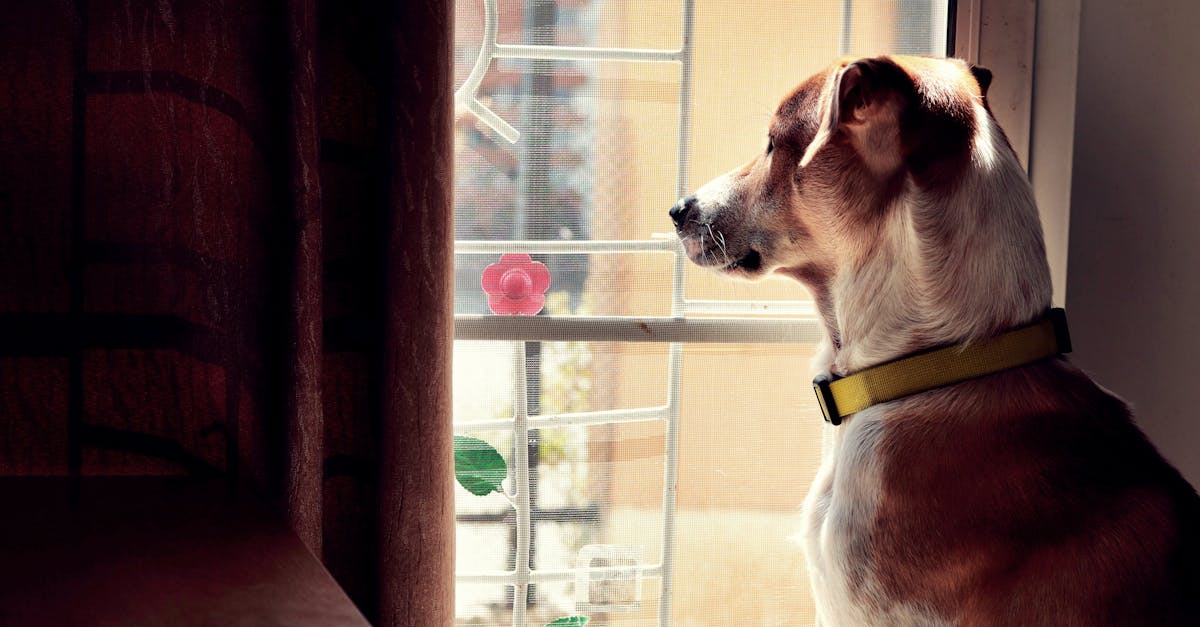
You search for help with your dog's separation anxiety and the prices land like a series of small shocks. A behaviourist quotes £600. An online programme wants £499. The vet mentions medication. The pet shop sells you £30 calming chews that run out in three weeks. So what does it actually cost to fix dog separation anxiety in the UK — and which of these options genuinely solves the problem?
This is an honest 2026 price guide. We compare every realistic route — certified separation anxiety trainers, online programmes, clinical behaviourists, veterinary medication, calming products, free charity advice, and self-guided protocols — with real UK cost ranges and, more importantly, a clear answer on what each one actually delivers.
The headline finding is simple: the price you pay matters far less than the method you follow. Every credible route relies on the same underlying technique — systematic desensitisation and counter-conditioning. The difference between a £600 programme and a £29 workbook is the delivery, the hand-holding, and the severity of case each is suited to — not the science.
The quick answer: dog separation anxiety treatment costs in the UK (2026)
Here is the full range at a glance. Costs vary by location, severity, and provider — these are typical UK figures for 2026.
| Option | Typical UK cost | Fixes the cause? |
|---|---|---|
| Certified separation anxiety trainer / online programme | £500–£1,200 (4–12 weeks) | Yes — if you complete it |
| Clinical animal behaviourist (vet referral) | £150–£300 + follow-ups | Yes — best for severe cases |
| Vet consultation + behavioural medication | £40–£80 + £20–£40/month ongoing | Supports treatment, does not replace it |
| Calming treats, supplements, diffusers | £15–£40/month, indefinitely | No — masks symptoms only |
| Free charity advice (Dogs Trust, RSPCA, Blue Cross) | £0 | Partially — guidance without structure |
| Self-guided science-based protocol (PAXA Solo) | £29 one-time | Yes — same method, structured for owners |
The rest of this guide breaks down each option — what you get for the money, when it is worth it, and the catch that the price tag does not reveal.
Option 1: A certified separation anxiety trainer or online programme — £500 to £1,200
This is the gold-standard professional route for owners who want to be guided through the process week by week. A Certified Separation Anxiety Trainer (CSAT) or qualified separation anxiety specialist designs a personalised plan, sets daily training targets, and reviews your dog's progress remotely — usually over four to twelve weeks.
UK programmes of this kind typically cost between £500 and £1,200. Individual sessions, where offered separately, generally run £60 to £120 each. The work is almost always delivered online, because separation anxiety training has to happen in your home, with your dog, around your real departures.
What you are paying for: accountability, an expert reading your dog's body language on camera, and a plan adjusted in real time when progress stalls. For complex cases, that tailoring is genuinely valuable.
The catch: there are only a small number of certified separation anxiety specialists in the UK, so waiting lists are common, and the method they apply — sub-threshold systematic desensitisation — is the same one documented in peer-reviewed veterinary behaviour research and followed in any structured self-guided protocol. You are paying a premium for delivery, not for a different or secret technique.
Option 2: A clinical animal behaviourist — £150 to £300, plus follow-ups
A clinical animal behaviourist (often accredited through the Animal Behaviour and Training Council or holding CCAB status) works on veterinary referral and is the right choice when separation anxiety is severe, when there is self-injury or sustained panic, or when an underlying anxiety disorder may be involved.
An initial behavioural consultation typically costs £150 to £300, with follow-up sessions on top. The significant advantage here: because the work is veterinary-referred, the cost is often partly claimable through pet insurance — something no online course or calming product offers. Always check your policy wording first, as behavioural cover and pre-existing exclusions vary widely.
For most mild to moderate cases, this level of clinical involvement is more than the situation requires. For severe cases, it is the safest and most appropriate route. If you are unsure where your dog sits on that spectrum, our guide to dog separation anxiety treatment in the UK explains how to gauge severity.
Option 3: Veterinary medication — £40 to £80 up front, then £20 to £40 a month
For some dogs, a vet may prescribe behavioural medication such as fluoxetine or clomipramine. It is important to understand what medication does and does not do: it lowers the baseline anxiety enough to make behavioural training possible in dogs whose stress response is too high to learn. It is a support to systematic desensitisation, not a substitute for it.
Budget roughly £40 to £80 for the initial consultation and £20 to £40 a month for the medication itself, on an ongoing basis until the behaviour work has done its job. Medication alone, with no training programme behind it, rarely resolves separation anxiety — it simply manages it for as long as the dog keeps taking it.
Option 4: Calming treats, supplements and diffusers — £15 to £40 a month, forever
This is where most UK owners start, and where the most money quietly disappears. Calming chews, L-theanine and valerian supplements, and pheromone diffusers cost £15 to £40 a month — which feels cheap until you notice the word month.
Used as the directions intend, these are recurring purchases with no end date. At £30 a month, that is £360 a year, every year, while the separation anxiety itself remains exactly where it was. Over a five-year period you could spend £1,800 managing the symptom — far more than any one-time programme that actually resolves it.
The reason they do not fix the problem is neurological, not commercial. Separation anxiety is a learned fear response triggered by your departure; a generalised calming supplement does not retrain the amygdala's prediction about that specific trigger. We explain the mechanism in full in why calming treats don't fix dog separation anxiety.
The cheapest-looking option — £30 a month for calming chews — is often the most expensive route of all, because it is the only one with no finish line.
Option 5: Free charity advice — £0
The UK's animal welfare charities offer genuinely excellent free guidance. Dogs Trust runs a free behaviour support line, and the RSPCA and Blue Cross both publish solid, science-aligned advice on separation-related behaviour.
If your budget is genuinely zero, this is the right place to begin. The limitation is structure: free articles tell you the principles — desensitise departure cues, stay below threshold, build duration slowly — but they cannot give you a day-by-day plan, a way to track progress, or a protocol for what to do when your dog regresses. For many owners, the gap between "I understand the theory" and "I know exactly what to do tomorrow morning" is where free advice runs out.
Option 6: A self-guided science-based protocol — £29, one time
Between free articles with no structure and a £600 programme with full hand-holding sits the option most owners are actually looking for: the complete method, written as a day-by-day plan, that you follow yourself.
This is what PAXA Solo is. It maps the same systematic desensitisation and counter-conditioning that a certified trainer would use into a 30-day protocol — threshold identification, departure cue desensitisation, sub-threshold absence building, regression protocols, and week-by-week milestones — for £29 as a one-time purchase, with no subscription and nothing to run out.
It is not the right tool for every case. A dog with severe, self-injuring separation anxiety needs the clinical route in Option 2. But for the mild to moderate cases that make up the majority — the velcro dog, the post-pandemic puppy, the dog that barks and paces but is not harming itself — a structured self-guided protocol delivers the identical method at a fraction of the cost. The science is not cheaper at £29; it is simply not marked up.
If you want to understand the method before you commit to anything, our free guide to dog desensitisation training, step by step walks through the exact technique the protocol is built on.
PAXA Solo is the complete 30-day separation anxiety protocol — the same systematic desensitisation method a £600 trainer would use, written as a daily plan you follow at home.
Start the protocol — £29 →Why the method matters more than the price
Here is the point that reframes the entire comparison. Strip away the price tags and you find that every effective option above is doing the same thing: gradually teaching the dog, below its anxiety threshold, that your departure is not a threat. That is systematic desensitisation combined with counter-conditioning — the only approach with a consistent evidence base for separation anxiety.
A £600 programme does it with a coach watching. A £29 protocol does it with a written plan. Free charity advice gestures at it without the structure. Calming treats and diffusers do not do it at all — which is precisely why they never end.
So the real question is not "what is the cheapest option?" but "what is the cheapest option that actually applies the method?" Once you frame it that way, the £30-a-month chews reveal themselves as the most expensive choice on the list, and the structured self-guided protocol as the most efficient. For the science behind why the method works and how permanent the change can be, see can separation anxiety in dogs be cured?
How much does the time cost — not just the money?
There is a second cost no price list shows: time. Whichever route you choose, separation anxiety is resolved through consistent daily training, typically over four to eight weeks for mild to moderate cases. The cortisol response that peaks 30 to 40 minutes after you leave is retrained session by session — there is no version of this, at any price, that works overnight.
This is worth saying plainly because it changes how you should weigh the options. Paying more does not buy speed; it buys guidance. If you are willing and able to apply a clear plan consistently, the self-guided route reaches the same destination on the same timeline. If you know you need someone holding you accountable, that is what the higher-priced programmes are genuinely worth paying for. We set honest expectations on duration in how long it takes to fix dog separation anxiety.
You don't have to do this alone — start free
Separation anxiety is isolating for owners as much as for dogs. Before you spend anything, you can download the first two days of the PAXA protocol free, and join a growing community of UK owners working through the same process — with science-backed guidance delivered to your inbox, not a sales pitch. It is the no-cost way to see whether the method is right for your dog.
Get the free 2-day start →Which option is right for your dog?
A simple way to decide, based on severity and budget:
Self-injury, sustained panic, escape attempts
Start with your vet and ask for a referral to a clinical animal behaviourist (Option 2). This is the safest route, and it is the one most likely to be supported by pet insurance. Medication (Option 3) may form part of the plan to make training possible.
You know you need accountability and coaching
A certified separation anxiety trainer or structured online programme (Option 1) is worth the £500–£1,200 if having an expert adjust the plan and keep you on track is what gets you to follow through.
A velcro or anxious dog that is not harming itself
A self-guided protocol (Option 6) gives you the same method as the premium programmes, structured day by day, for £29. This fits the majority of cases — and you can begin with the free 2-day start to test it first.
Calming treats, supplements, diffusers
Useful at most as a minor support alongside real behaviour work — never as the solution itself. As a standalone approach they are the most expensive option over time and resolve nothing.
Dog separation anxiety cost: frequently asked questions
How much does it cost to fix dog separation anxiety in the UK?
It ranges from £0 to over £1,200 depending on the route. A certified trainer or online programme is typically £500–£1,200; a clinical behaviourist is £150–£300 plus follow-ups; vet medication adds £20–£40 a month; calming products cost £15–£40 a month indefinitely; charity advice is free; and a self-guided science-based protocol such as PAXA Solo is £29 one-time. Effectiveness depends on the method — systematic desensitisation — far more than on the price.
How much does a separation anxiety dog trainer cost in the UK?
A Certified Separation Anxiety Trainer or qualified specialist typically charges £500–£1,200 for a structured four to twelve-week programme delivered remotely. Individual sessions, where available, are usually £60–£120 each. There are only a small number of certified separation anxiety specialists in the UK, so availability can affect both cost and waiting time.
Can I fix my dog's separation anxiety myself without a trainer?
In most mild to moderate cases, yes. The evidence-based method is the same whether a £600 trainer delivers it or you follow a structured self-guided protocol: identify your dog's anxiety threshold, desensitise departure cues, and build absences in small sub-threshold steps without flooding. A clear written plan lets most committed owners do this themselves. Severe cases — self-injury, prolonged panic, or a co-occurring disorder — warrant professional and veterinary input.
Does pet insurance cover dog separation anxiety treatment?
Some UK policies cover behavioural treatment, but usually only when delivered by or on referral from a vet — typically a clinical animal behaviourist. Cover is subject to your limit and excess, and many policies exclude behavioural or pre-existing conditions. Self-guided programmes, online courses and calming products are not normally claimable. Check your specific policy wording before assuming you are covered.
Is it worth paying for a dog behaviourist for separation anxiety?
For severe cases — self-injury, sustained panic, escape attempts, or a suspected underlying anxiety disorder — yes, a qualified clinical animal behaviourist working with your vet is worth the cost and is the safest route. For mild to moderate cases, the core method is straightforward enough that a well-structured self-guided protocol delivers the same approach for far less. The decision turns on severity, not on whether the problem can be fixed at home.
Why do calming treats cost more over time than fixing the problem?
Calming treats, supplements and diffusers are recurring purchases — £15–£40 a month — because they manage symptoms rather than resolving the fear response. Used indefinitely, that is £180–£480 a year, every year, while the anxiety remains. A one-time protocol that retrains the dog's response to being alone removes the need for ongoing symptom management entirely, which is why it is almost always cheaper across a dog's lifetime.
Key takeaways
- UK costs range from £0 to £1,200+ — but the price reflects delivery and guidance, not a different or better technique.
- Every effective option uses the same method: systematic desensitisation and counter-conditioning, applied below the dog's anxiety threshold.
- Severe cases (self-injury, panic) need the clinical route — your vet plus a referral to a behaviourist, often partly insurance-claimable.
- Calming treats and diffusers are the most expensive option over time — recurring forever, fixing nothing.
- For mild to moderate cases, a structured self-guided protocol delivers the same approach for £29 — and you can test the method free first.
- No option works overnight. Resolution takes four to eight weeks of consistent daily training at any price.
To go deeper before you decide: read Dog Separation Anxiety Treatment UK: What Actually Works in 2026 for the full evidence review, Dog Desensitisation Training: A Step-by-Step Guide for UK Owners for the exact method behind every effective option, and How Long Does It Take to Fix Dog Separation Anxiety? for honest timeline expectations. If you are still working out whether your dog has true separation anxiety at all, start with Dog Separation Anxiety vs Boredom.
The same method. A fraction of the price.
PAXA Solo is a 42-page science-backed workbook that maps the complete systematic desensitisation and counter-conditioning protocol into 30 daily sessions — threshold identification, departure cue work, regression protocols, and week-by-week milestones. The method a £600 trainer would use, structured for UK owners who want to fix the problem rather than manage it indefinitely.
Start the protocol — £29 →Instant download · 42-page PDF · One-time purchase · No subscription