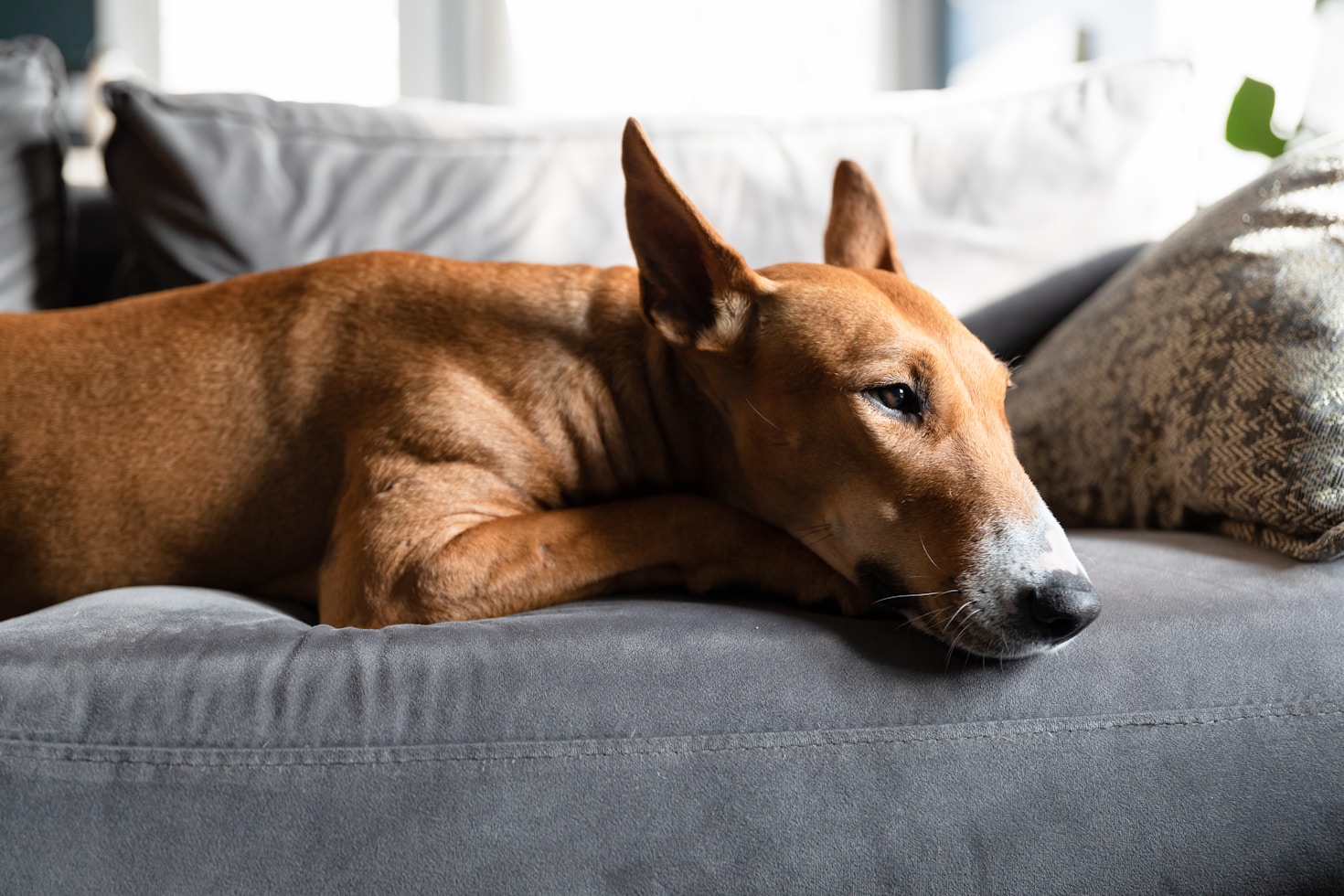
Cockapoos are not anxious by accident. According to UK research by Napo Pet Insurance, the breed ranks second nationally — behind Dachshunds, ahead of Toy Poodles — in predisposition to separation anxiety. The cause is genetic, the symptoms are predictable, and the standard advice circulating in UK Cockapoo forums actively makes the problem worse. Here is what the science says, and the exact protocol that works.
Your Cockapoo crying when you reach for your keys is not a quirky personality trait. It is a learned neurological threat response in a breed selectively engineered for human bonding. Both parent breeds — the working Cocker Spaniel and the Poodle — were developed for close, continuous partnership with handlers. The Cockapoo inherits that drive at a doubled intensity, and in the post-pandemic UK environment, that genetic baseline has met its worst-case scenario.
This guide covers the seven breed-specific clinical signs of Cockapoo separation anxiety, why the typical advice ("just leave them, they'll get used to it") accelerates the problem, and the structured 30-day protocol that genuinely rewires the fear response.
Free · Days 1 & 2 of the protocol
Try the first two days of the PAXA protocol free
Get the same structured baseline-and-threshold sessions used on day 1 and day 2 of PAXA Solo — designed for anxious UK dogs including Cockapoos. Instant PDF download. No payment. Just your email so we can send it.
Get the free 2-day preview →Why Cockapoos are genetically predisposed to separation anxiety
Three breed-specific factors explain why Cockapoos consistently rank among the UK's most affected breeds.
1. Both parent breeds were selectively bred for continuous human partnership. The Cocker Spaniel was developed as a flushing dog working within a few feet of its handler for hours at a time. Constant proximity was a working requirement, and dogs that drifted were not bred. The standard Poodle was originally a water retriever — also requiring intense focus on the handler — and was later refined into a companion breed selected explicitly for close human attachment. The Cockapoo is the genetic intersection of two breeds that were independently optimised for the same trait: stay close, watch the human, do not lose contact. The hybrid does not dilute this drive. It compounds it.
2. High intelligence intensifies sensitivity to environmental change. Cockapoos score consistently high on canine cognitive assessments. This is widely sold as a positive trait, and it is — except when it interacts with separation anxiety. An intelligent dog notices and encodes every departure cue: the time you usually leave, the order you put on shoes and jacket, which way you turn at the door. Research published in Applied Animal Behaviour Science consistently shows that salivary cortisol spikes sharply within the first 30–40 minutes of separation — and in breeds with strong predictive cue recognition, the cortisol cascade often begins before the owner has even left the house.
3. The post-pandemic UK ownership boom is the worst possible context. Cockapoo registrations in the UK surged dramatically between 2020 and 2022. A generation of Cockapoo puppies spent their critical socialisation period — roughly three to twelve weeks — in homes where owners were continuously present. Brief absences, which normally form a stable baseline of "alone is safe", never occurred. When owners returned to office or hybrid working in 2023–2024, those Cockapoos faced their first sustained absences as fully grown dogs without a learned baseline of alone-time tolerance. The behavioural problem followed predictably.
Dogs Trust identifies post-pandemic ownership and high-attachment breeds as specific risk factors. Cockapoos sit at the intersection of both.
The Cockapoo crying at your door is not failing to settle. They are running the genetic program their parent breeds were optimised for — stay close, do not lose the human — without the structured early-life exposure that would have taught them absences are temporary.
The 7 signs of separation anxiety in a Cockapoo
Some signs of separation anxiety are universal across all dogs. Others are notably breed-specific in Cockapoos because of their parent-breed inheritance. Distinguishing settling distress from clinical separation anxiety is the most important diagnostic step a Cockapoo owner can take — the treatments differ significantly.
Sign 01
High-pitched bark-howl pattern within seconds of departure
The Cocker Spaniel inheritance produces a distinctive vocal signature in anxious Cockapoos — a high-pitched bark that quickly transitions into a sustained howl. This pattern often begins within seconds of the owner reaching the door, not after the typical 5–15 minute settling period. The vocalisation does not reduce over the absence; if anything, it intensifies as cortisol peaks in the first 30–40 minutes.
Sign 02
Refusal to eat high-value treats when alone
Leave a piece of chicken, cheese, or your Cockapoo's favourite treat in a known location before you leave. On return, check whether it has been eaten. A Cockapoo in genuine separation anxiety will not touch it. Elevated cortisol suppresses the digestive system and overrides the reward pathway. A Cockapoo who is simply adjusting to alone time will eat the treat. This single diagnostic test has more clinical value than almost any other behavioural observation — and is particularly useful in Cockapoos because the breed's food motivation is normally exceptionally high.
Sign 03
Exit-focused destruction — door frames, skirting boards, window sills
If your Cockapoo chews door frames, scratches the front door, or destroys skirting boards and window sills specifically — this is escape-seeking behaviour, not boredom. The destruction is precisely located at points where you disappeared or where the dog can monitor for your return. Cockapoos in boredom typically destroy across available surfaces (toys, cushions, slippers); Cockapoos in separation anxiety destroy at exits. The location is the diagnostic.
Sign 04
Excessive self-grooming or paw-licking during absences
This is a breed-typical sign that is often missed. Anxious Cockapoos frequently develop compulsive grooming behaviours — repeated paw licking, flank-chewing, or coat-pulling — as a self-soothing response to elevated cortisol. The Poodle inheritance contributes to this pattern; Poodles are noted for similar stress-grooming. Owners often notice damp paws, saliva-staining on the coat, or thinning fur in specific areas after periods alone. The PDSA lists self-directed behaviours among the clinical indicators of separation-related distress.
Sign 05
Soft-mouth carrying or hoarding of owner-scented items
Cockapoos with separation anxiety frequently carry and gather owner-scented items — socks, slippers, worn t-shirts — to a chosen resting spot during absences. This is not destruction but comfort-seeking via olfactory contact. The Spaniel soft-mouth inheritance often means these items are picked up gently and licked or held rather than chewed. While endearing, this is a clinical sign that the dog is using your scent as a substitute safety signal because the real safety signal (you) is absent.
Sign 06
Repetitive pacing between exit points
An anxious Cockapoo on camera will typically pace in a repetitive pattern between the front door, the window where you left from, and other potential exit or sightline points. The pacing is rhythmic, not exploratory — the dog is in active sympathetic nervous system arousal, not investigating the environment. This is one of the clearest signs visible on a phone-camera observation and far more reliable than relying on what neighbours report hearing.
Sign 07
Velcro behaviour at home — and intense relief on return
Cockapoos with separation anxiety usually display extreme owner-following behaviour even when the owner is present — into the bathroom, into every room, panicking briefly when the owner walks out of sight. This is not affection. It is hypervigilance toward the safety signal. Paired with intense, immediate relief on return — distress dissolving the instant you appear, not after a few minutes — this completes the diagnostic picture. For a deeper diagnostic on this specific pattern, see velcro dog or separation anxiety: the science-backed difference.
Why standard Cockapoo forum advice makes the problem worse
The most common advice in UK Cockapoo Facebook groups and forums for separation anxiety is some variation of: "Be consistent, leave them for short periods, let them cry it out." This advice is not just ineffective — it is actively counterproductive in dogs with clinical separation anxiety.
The technique being described is flooding — full-intensity exposure to the fear trigger without the dog being able to escape. In humans, this approach is used in highly controlled clinical settings under therapist supervision for specific phobias. In an anxious Cockapoo left at home, flooding produces one of two outcomes:
Learned helplessness. The Cockapoo eventually stops vocalising and appears to "settle." Owners interpret this as progress. Cortisol studies tell a different story: in dogs that have stopped vocalising after repeated flooding, salivary cortisol levels remain elevated — sometimes for hours after the owner returns. The dog has not recovered. They have entered a passive shutdown state where they have stopped attempting to signal distress. The anxiety is unchanged; only the expression of it has been suppressed. The breed's intelligence makes Cockapoos particularly prone to this outcome, because they quickly learn that vocalising does not produce the owner's return.
Threshold sensitisation. Each flooding event where the Cockapoo reaches panic state does not reduce the amygdala's threat prediction — it confirms it. Every unmanaged high-intensity absence is evidence, from the dog's neurological perspective, that departure equals genuine danger. The threshold at which anxiety activates lowers over time, not raises. The Cockapoo who panicked at five minutes in week one panics at three minutes in week eight.
This is why Cockapoo owners who "just leave them" frequently find the problem worse at six months than it was at eight weeks. The flooding approach is not neutral. It actively compounds the very problem it is meant to solve. For the full breakdown of why this pattern is so common, see 5 things that make dog separation anxiety worse (most owners do at least 3).
The PAXA Solo workbook contains the complete 30-day protocol — including Cockapoo-relevant threshold assessment, the departure cue desensitisation sequence, and regression protocols for high-intelligence high-bonding breeds.
Start the protocol — £29 →The correct approach: systematic desensitisation, structured for the Cockapoo brain
The evidence-based treatment for separation anxiety in any dog is systematic desensitisation combined with counter-conditioning. This is the approach endorsed by the RSPCA, Blue Cross, the Association of Pet Dog Trainers (APDT), and the wider veterinary behavioural science community.
For Cockapoos, the protocol runs in four sequenced phases, with two breed-specific adjustments: shorter, more frequent training sessions (the breed's intelligence means they learn faster but fatigue mentally faster), and stronger emphasis on early departure-cue work (their predictive cue recognition is higher than average).
Phase 1: Establish the calm baseline (days 1–7)
Before any desensitisation work, your Cockapoo needs a stable nervous-system baseline. This means daily aerobic exercise — 30 minutes is the evidence-based target, as it reduces salivary cortisol by up to 30% — combined with mental enrichment (the breed needs this) and structured decompression time without interaction demands. Lick mats, scatter feeding, and snuffle mats activate the parasympathetic nervous system and directly counter cortisol.
During this first week, manage absences as carefully as possible. Use a dog-sitter, neighbour, or doggy daycare to avoid leaving your Cockapoo above their current anxiety threshold. The goal of week one is not to train — it is to stop accumulating damage while you build the foundation.
Phase 2: Identify the threshold (days 7–10)
Your Cockapoo's threshold is the point at which any anxiety signal first appears during an absence — pacing, whimpering, panting, refusal to engage with food. This might be 10 seconds. It might be 5 minutes. The number does not matter; the precision does.
Set up a phone or camera, leave the house, and watch. Note the exact moment any stress signal appears. Subtract 5–10 seconds. That is your starting point for training sessions. You are not training your Cockapoo to tolerate anxiety. You are training them at durations so short that no anxiety occurs. This is the core principle of sub-threshold training and the reason flooding fails where desensitisation succeeds.
Phase 3: Desensitise departure cues (days 10–17)
This phase matters disproportionately in Cockapoos because of the breed's predictive cue recognition. Most anxious Cockapoos begin showing stress before you reach the door — keys picked up, shoes put on, jacket retrieved. The amygdala starts its threat cascade before you have even left.
For one to two weeks, systematically desensitise departure cues. Pick up your keys and put them down — no departure. Put on your shoes and sit back down. Touch the door handle and walk away. Repeat each cue dozens of times daily, without leaving, until your Cockapoo shows no anticipatory stress response.
This phase alone — departure cue desensitisation — typically produces measurable improvement in most Cockapoos within 10–14 days of consistent daily sessions. The cortisol spike that peaks 30–40 minutes after departure cannot build if the amygdala never activates at the trigger cues in the first place.
Phase 4: Build absences in sub-threshold increments (days 17–30+)
Once departure cues are neutralised, begin actual absences. Always start below your identified threshold. Build duration in small, controlled increments — seconds to minutes, not minutes to hours. Use a camera to observe remotely. Stop any session at the first sign of anxiety, not after.
A sample first-week absence progression for a Cockapoo with a two-minute threshold:
- Days 17–19: Absences of 30–60 seconds, ten repetitions per session
- Days 20–23: Absences of 60–90 seconds, eight repetitions per session
- Days 24–28: Absences of 90 seconds to 3 minutes, six repetitions per session
- Days 29–30: First sub-threshold absences of 5–10 minutes, fewer repetitions
The progression is not linear. Some days your Cockapoo will handle five minutes easily. Other days they will threshold at 90 seconds for no apparent reason. These fluctuations are normal in any dog and particularly pronounced in high-intelligence breeds. Step back on difficult days rather than pushing through. Pushing through is flooding. Stepping back is training.
For the complete step-by-step desensitisation method, see dog desensitisation training: a step-by-step guide for UK owners.
How long does Cockapoo separation anxiety take to fix?
Honest answer: four to six weeks for mild to moderate cases with consistent daily training. Eight to twelve weeks for severe cases, post-pandemic Cockapoos with no early alone-time foundation, or dogs with multi-rehoming histories.
Cockapoos often respond particularly well to structured desensitisation because the breed's high intelligence accelerates the encoding of new safety associations once the protocol runs below threshold. The same intelligence that makes the problem severe when training is wrong makes the solution faster when training is correct.
What predicts treatment length is consistency. Daily sessions of 10–15 minutes (Cockapoos benefit from slightly shorter sessions than larger breeds to avoid mental fatigue), run below threshold every time, compound quickly. Missed days, inconsistent application, and "testing" the dog with longer absences before the threshold has genuinely extended will extend the timeline significantly. For the full timeline breakdown, see how long it takes to fix dog separation anxiety: an honest timeline.
What does not help your Cockapoo — and why
Calming treats, CBD oils, and supplements
Products containing L-theanine, ashwagandha, CBD, or valerian may slightly reduce generalised anxiety in some dogs. They do not treat separation anxiety. Separation anxiety is a specific learned fear response triggered by a specific stimulus — your departure. Generalised anxiolytics cannot retrain the amygdala's prediction about that specific trigger. For a detailed analysis, see why calming treats don't fix dog separation anxiety.
Getting a second dog "for company"
This is a particularly common suggestion in UK Cockapoo communities. It does not work. True owner-specific separation anxiety is triggered by your absence, not isolation in general. Your Cockapoo will remain distressed with another dog present, because the safety signal — you — is still absent. A second dog adds management complexity on top of an unresolved problem.
Crating without behavioural work
A crate does not treat separation anxiety. A Cockapoo in genuine distress is equally or more distressed in a crate — the confinement prevents escape-seeking behaviour but does not address the underlying fear, and forced confinement can produce secondary injury risks (broken teeth, torn paws, self-injury from escape attempts). Crate training has legitimate uses, but it should be entirely separate from separation anxiety treatment.
Doggy daycare every day
Daycare is a useful management tool during the active training phase, but it is not a treatment. A Cockapoo who only avoids separation anxiety by being at daycare has not had their underlying fear response retrained — they have simply avoided the trigger. The amygdala's threat prediction remains intact and will reactivate the moment daycare ends or the dog must be alone.
Free download · Cockapoo-suitable
Run the first two protocol days on your Cockapoo this week — free
Days 1 and 2 of PAXA Solo are designed to establish the calm baseline and identify your dog's exact anxiety threshold — the two foundations everything else builds on. Free, instant, no payment. We email it the moment you enter your address.
Download free Days 1 & 2 →The Cockapoo separation anxiety checklist
If you are starting from scratch with a Cockapoo showing the seven signs, this is the sequence that produces results:
- Establish the calm baseline. 30 minutes daily aerobic exercise, mental enrichment, decompression time. Cortisol drops by up to 30% with consistent exercise — the threshold rises before training begins.
- Diagnose accurately with the high-value treat test. A Cockapoo who eats the treat is in settling distress. One who does not is in clinical separation anxiety. Treatments differ; diagnosis decides which.
- Identify your Cockapoo's actual threshold via camera. Subtract 5–10 seconds for your training starting point. Recheck weekly — Cockapoo thresholds shift more variably than larger breeds.
- Run departure cue desensitisation daily for one to two weeks. Keys, shoes, jacket, door handle — each cue repeated until completely neutral. This phase alone produces visible improvement in most Cockapoos.
- Begin sub-threshold absence sessions. Short, frequent, observed via camera. End at the first sign of anxiety, not after. Cockapoos benefit from shorter, more frequent sessions (10–15 minutes) than larger breeds.
- Manage all real-world absences during training. Dog-sitter, neighbour, daycare — whatever it takes to avoid setting your Cockapoo above threshold while the new neural pathway is being established.
- Build incrementally and keep a log. Date, session duration, dog state at end. Patterns become visible within a week.
- Plan for regressions — they are normal. A single flooding event is not failure. Step the threshold back, not all the way to zero, and continue.
This is the structure behind the PAXA Solo 30-day protocol, with high-intelligence-breed adjustments built into the daily session lengths and progression speed.
Cockapoo separation anxiety: frequently asked questions
Are Cockapoos prone to separation anxiety?
Yes — significantly. UK research by Napo Pet Insurance ranks Cockapoos as the second most predisposed UK breed to separation anxiety, behind Dachshunds and ahead of Toy Poodles. Three factors drive this: both parent breeds (Cocker Spaniel and Poodle) were selectively bred for close human partnership; the breed's high intelligence makes it more sensitive to environmental change; and the post-pandemic UK ownership boom meant a generation of Cockapoos was socialised without learning early alone-time tolerance.
How long can a Cockapoo be left alone?
Adult Cockapoos in good emotional health can be left alone for up to four hours, in line with general UK guidance from Dogs Trust, the RSPCA, and the PDSA. For Cockapoos with separation anxiety, the limit is not measured in hours but in their current anxiety threshold — the point at which any distress signal first appears. Training sessions should always remain below this threshold.
What are the signs of separation anxiety in a Cockapoo?
The seven clinical signs are: immediate high-pitched bark-howl vocalising; refusal to eat high-value treats when alone; exit-focused destruction at door frames and skirting boards; excessive self-grooming or paw-licking; soft-mouth carrying of owner-scented items; repetitive pacing between exits; and velcro behaviour at home with intense relief on return. The presence of three or more of these patterns is a strong clinical indicator.
Why does my Cockapoo follow me everywhere?
Cockapoos were bred from two parent breeds — Cocker Spaniels and Poodles — both genetically optimised for close human partnership. Constant following can be normal companionable velcro behaviour or hypervigilant tracking driven by separation anxiety. The distinguishing factor is whether your Cockapoo can rest calmly out of sight of you — a relaxed Cockapoo can; an anxious one cannot.
Can Cockapoo separation anxiety be cured?
Yes. Separation anxiety is a learned fear response — and because it is learned, it can be unlearned through systematic desensitisation and counter-conditioning. The brain's neuroplasticity allows the amygdala's threat prediction to be genuinely rewired. Cockapoos often respond particularly well because the breed's intelligence accelerates new safety-association learning. For the full evidence base, see can separation anxiety in dogs be cured?
How long does it take to fix Cockapoo separation anxiety?
Four to six weeks for mild to moderate cases with consistent daily training. Eight to twelve weeks for severe or post-pandemic cases. Consistency of sub-threshold sessions is the primary variable — not the duration of the problem before treatment.
Should I get a second dog to help my Cockapoo?
Rarely. True owner-specific separation anxiety is triggered by your absence, not isolation in general. Your Cockapoo will remain distressed with another dog present, because the safety signal — you — is still absent. A second dog adds management complexity on top of an unresolved problem.
Key takeaways
- Cockapoos rank #2 in UK breeds predisposed to separation anxiety — driven by parent-breed bonding genetics, high intelligence, and the post-pandemic ownership boom.
- The seven breed-specific clinical signs distinguish true separation anxiety from settling distress or normal velcro behaviour.
- Standard Cockapoo forum advice ("just leave them") is flooding — it produces learned helplessness or threshold sensitisation, not recovery.
- Systematic desensitisation runs below threshold, always. Sessions above threshold reinforce the old neural pathway; sessions below it build the new one.
- Departure cue work matters disproportionately in Cockapoos because of the breed's predictive cue recognition.
- Most mild-to-moderate Cockapoo cases resolve in 4–6 weeks of consistent daily sub-threshold sessions. Severe cases take 8–12 weeks.
- Symptom-masking approaches — calming treats, CBD, second dog, daycare — do not retrain the amygdala. Only structured desensitisation does.
For the underlying cortisol science explaining why the first 40 minutes of any absence matters most, see The 40-Minute Rule: Why Your Dog's Anxiety Peaks When You Leave. To distinguish boredom from anxiety in a high-intelligence breed like the Cockapoo, the diagnostic framework in Dog Separation Anxiety vs Boredom is essential reading. To move from diagnosis to action, the step-by-step method is in Dog Desensitisation Training: A Step-by-Step Guide for UK Owners. For the broader UK treatment context, see Dog Separation Anxiety Treatment UK: What Actually Works in 2026. If you've recently adopted, the rescue-specific guide is Rescue Dog Separation Anxiety UK Complete Protocol, and the velcro-specific diagnostic is at Velcro Dog or Separation Anxiety.
Your Cockapoo needs a protocol, not patience.
PAXA Solo is a 42-page science-backed workbook that maps the complete systematic desensitisation and counter-conditioning protocol into 30 daily sessions — with threshold identification, departure cue work, regression protocols, and session-length adjustments suited to high-intelligence breeds like the Cockapoo. Written for UK owners who have tried the forum advice, the calming treats, and the YouTube videos, and now want the protocol that actually works.
Start the protocol — £29 →Instant download · 42-page PDF · Science-backed protocol · 30-day structure